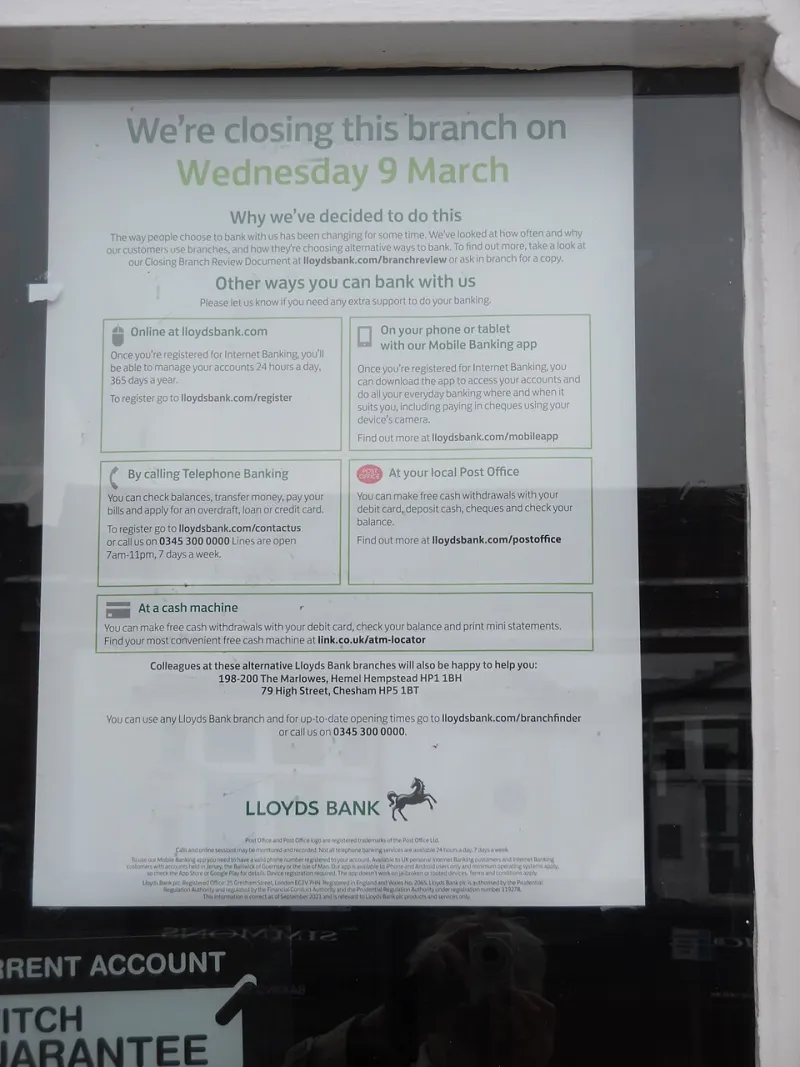
Between Consumer and Commercial: A Sole Trader’s Mid-Year Bank Closure Plan
When a bank closes a sole trader’s business account, the letter often arrives at an awkward moment: between VAT quarters, ahead of a Self Assessment payment, or in the middle of a client project. The immediate question is practical—where does the next payment land?—but the deeper problem is structural. A sole trader is neither a limited company nor, in every respect, an ordinary personal customer. That middle position affects notice periods, complaint routes and the kind of appeal that is worth making.
As of November 2026, the UK banking market offers plenty of alternatives, but switching is not instantaneous. Client mandates, card acquirer arrangements and HMRC direct debits all have to be moved. The aim is not merely to open another account. It is to keep the business record coherent while the banking arrangement is rebuilt.
Why the sole trader sits in the middle
A sole trader trades as an individual. Legally, the business income and the person are not separated in the way they are for a company. In banking terms, however, the account may be marketed and operated as a business account, with commercial terms, fees and eligibility rules. That can leave the customer in a grey area: some payment-services protections may apply, and some ombudsman routes may be available, but the bank will not necessarily treat the closure like a personal current account complaint.
Where the account is a payment account governed by the Payment Services Regulations 2017, the bank will usually need to give at least two months’ notice of termination, unless a shorter period is permitted for specific reasons. The account terms still matter. Notice does not guarantee a workable wind-down, and a bank may restrict new activity before the final closure date. The first task is therefore to establish exactly what the letter says: the closure date, any restrictions, the complaint deadline and whether the bank has given a reason.
Stabilise the money flow first
Before drafting an appeal, protect the receipts. List every route by which money reaches the business: Faster Payments, BACS credits, card settlements, payment links, cheques and cash deposits. Then ask which of those depend on the closing account.
For invoice payments, send clients a short, verified update. Use a phone call followed by written confirmation rather than a bare email, because payment-detail changes are a common fraud vector. Give the new account details only after the new account is open and the bank has confirmed it can receive business payments. If clients pay by card, check whether the card acquirer or payment platform settles funds into the closing account; changing the settlement account may require fresh underwriting.
Do not assume a personal account can absorb business receipts. Many personal current account terms restrict business use, and doing so may create a second problem. If a temporary arrangement is unavoidable, ask the receiving bank in advance whether it permits the type of transactions involved.
Redirect the plumbing: direct debits, standing orders and card receipts
Download at least twelve months of statements before access is withdrawn. Use them to build a complete list of direct debits, standing orders and regular credits. Direct debits are controlled by the originator, so contact each supplier, landlord, insurer and HMRC unit directly. A bank cannot usually move a direct debit to another bank on the customer’s behalf.
Standing orders are easier because the customer controls them, but they still need to be recreated. Card receipts need separate attention: the merchant acquirer, gateway or payment facilitator may be a different firm from the bank. Check settlement timing, reserve arrangements and terminal contracts. A closed account can leave card takings suspended even when the card terminal itself still works.
Keep HMRC and the records intact
Update bank details with HMRC for Self Assessment, VAT and any PAYE scheme. Check the date of the next payment on account or VAT return and, if funds are temporarily inaccessible, contact HMRC before the deadline rather than after it. Time to Pay arrangements are not automatic, but an early call with a realistic proposal is better than a missed payment.
Record-keeping does not stop because the account has. Export statements, closure letters, complaints and correspondence. Keep a reconciliation showing opening balance, receipts, payments and the final balance returned. HMRC generally expects sole traders to keep business records for at least five years after the 31 January submission deadline for the relevant tax year; VAT records must generally be kept for six years. The bank’s closure letter is part of that record because it explains gaps in the audit trail.
Build an appeal around business impact
A closure appeal is stronger when it describes consequences, not just inconvenience. Ask the bank for the reason in writing and for any specific evidence it can disclose. If the bank cites a commercial or risk decision, it may not give detailed reasons. If a suspicious activity report is involved, the bank may be legally barred from explaining. Do not treat silence as proof of wrongdoing, but do record it.
Set out the business impact in concrete terms: expected client receipts, contracts at risk, suppliers paid by direct debit, tax payments due, card settlement arrangements and the cost of opening and migrating an alternative account. Ask for a practical wind-down—for example, a short period in which incoming credits and essential direct debits can still be processed, or a read-only period after closure. The bank is not obliged to grant it, but a specific request is easier to consider than a general plea.
Escalate—and keep the record
Use the bank’s formal complaints procedure and keep a dated timeline. If the bank issues a final response, check the deadline for escalation. The Financial Ombudsman Service can consider complaints from eligible small businesses, but eligibility depends on factors such as structure, turnover and employee numbers. A sole trader should check the current rules rather than assume access.
At Account Closed, the guiding principle is that a closure letter is a starting point for evidence-gathering, not the end of the matter. The sole trader’s advantage is documentary: invoices, statements, contracts and tax records can show what the closure actually disrupted. A calm, well-ordered file will not force a bank to keep an account open, but it gives the customer the best chance of a fair wind-down and a complaint that reflects the real cost of being shut out mid-year.