No Open Account, No Switch: Rebuilding Your Payment Trail After a Bank Closure
Photo: Peter Church, CC BY-SA 2.0, via Wikimedia Commons
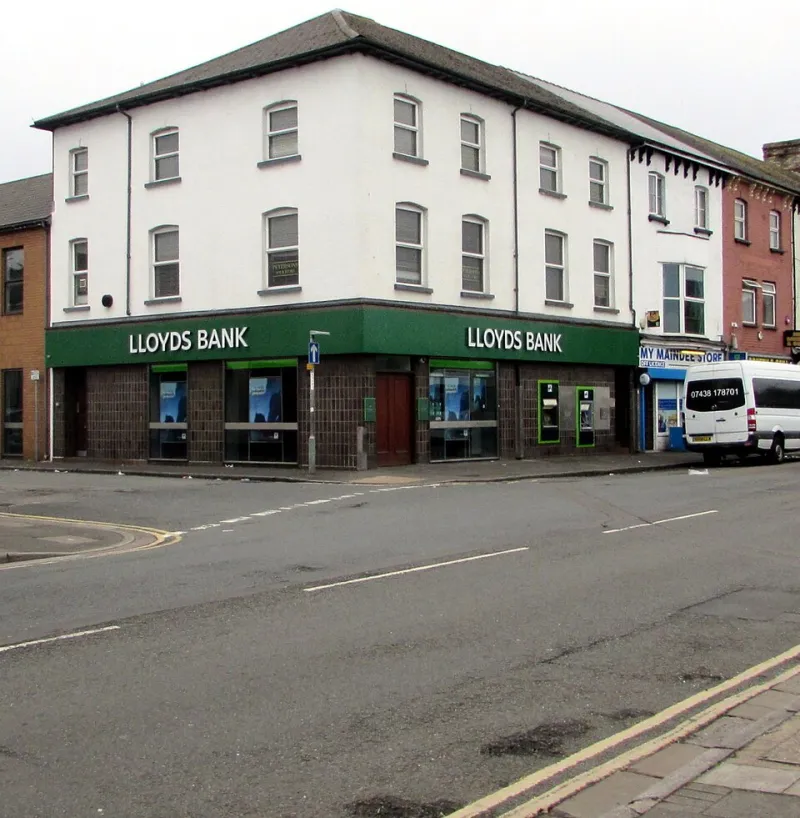
A bank closure is often described as an ending, but the financial relationships attached to an account rarely stop on the same day. Direct debits, standing orders, salary credits, pension payments and saved payees all continue to point at the old sort code and account number until someone changes them. The Current Account Switch Service is frequently offered as the obvious solution. In practice, it is designed for a different problem: moving from an account that is still open and functioning, not rescuing one that has already been shut.
Why the switch guarantee assumes an open door
The Current Account Switch Service is built around a planned transfer between two eligible current accounts. The customer chooses a switch date, the new provider opens the replacement account, and the service coordinates the movement of the balance, recurring payments and payment redirects. The guarantee is valuable because it places responsibility on the banks if something goes wrong during that process.
That architecture depends on the old account being open long enough to participate. Once a bank has closed an account, the switch process cannot ordinarily be started from it. The closure may have been sudden, or it may have followed a notice period, but the practical result is the same: there is no live account from which a formal switch can be arranged. A customer cannot ask the switch service to reverse a closure, transfer a closed account’s payment arrangements retrospectively, or impose the switch guarantee on a relationship that has already ended.
This distinction matters because readers sometimes assume that the switch guarantee creates a general right to seamless banking. It does not. It protects a defined switching process. After closure, the work becomes one of reconstruction rather than transfer.
What redirects can and cannot do
Payment redirects are one of the most visible features of the switch service. When a switch is completed, payments sent to the old account can be redirected to the new one for a set period. That gives payers and recipients time to update their records.
Redirects are not a universal safety net after a closure. They are tied to a completed switch. If no switch took place, there is no redirect arrangement to rely on. A payment sent to a closed account may be returned, rejected or held while the sending bank tries to establish what has happened. The exact outcome can depend on the payment type, the sending institution and the information attached to the payment.
Saved payees are a separate issue. A list of payees held in a banking app is not the same as a payment instruction. The switch service can help move certain recurring payment arrangements, but it does not guarantee that a customer’s saved payee list, payment history or preferred references will appear in the new account in a usable form. After a closure, those details usually need to be rebuilt manually.
The payment trail after closure
Direct debits are mandates given by the customer to a merchant and the customer’s bank. When the account closes, the mandate cannot simply continue. The merchant may attempt a collection and find that the account is no longer available. Some organisations will contact the customer; others may apply a failed payment charge or suspend a service. The customer should not wait to see which approach is taken.
Standing orders are instructions held by the old bank. They cease when the account closes. A standing order to a landlord, savings provider or family member will not move itself to a new account unless the customer creates a fresh instruction.
Salary and pension credits are similarly dependent on the employer or administrator being given new details. A payroll department cannot redirect a payment simply because the employee has opened a new account elsewhere. The same applies to benefits, tax credits, insurance refunds and any other regular credit.
Card subscriptions and continuous payment authorities add another layer. These are not identical to direct debits and may be held by the merchant rather than the bank. A closed account can leave a subscription in limbo, with the merchant attempting a charge against a card linked to an account that no longer exists.
A practical sequence for rebuilding a clean footprint
First, secure the record. Download or request final statements covering at least the previous twelve months, together with any closure letters and correspondence. These documents are the basis for identifying every recurring payment and credit.
Second, establish a new account before attempting to rebuild the payment trail. If a standard current account is not available, a basic bank account or another provider may be the practical route. The aim is to have a working sort code and account number ready before approaching payroll, pension providers and merchants.
Third, build a written schedule. List every direct debit, standing order, regular card payment, salary credit, pension payment and saved payee. Mark which ones are essential, which are discretionary and which can be cancelled. This reduces the risk of missing a payment while the new account is being set up.
Fourth, contact the organisations in order of consequence. Payroll and pension providers should be early, because a missed salary or pension credit can cause immediate difficulty. Essential household direct debits, insurance and loan payments should follow. Merchants holding card subscriptions can be updated alongside them.
Fifth, create fresh mandates and standing orders at the new provider. Do not assume that a merchant has updated its records simply because the customer has provided new details. Confirm each change in writing or by secure message where possible.
Sixth, monitor the old payment trail for a reasonable period. Failed payment notices, letters from merchants and credit file entries should be checked and corrected. A closure does not automatically damage a credit file, but missed payments caused by a broken payment trail can.
When the closure itself is disputed
Rebuilding a banking footprint is not the same as accepting that the closure was fair. A customer who believes a bank has acted unfairly can complain through the provider’s formal complaints process and, if unresolved, take the matter to the Financial Ombudsman Service. Those routes can address the closure and any consequential loss, but they do not usually restore the closed account or operate the switch service retrospectively.
That is why the practical work should continue alongside any complaint. A disputed closure can take time, and the payment trail cannot wait indefinitely for the outcome.
The limits of a clean rebuild
A new provider may ask why the previous account was closed. Customers should answer accurately and provide context where appropriate. Multiple applications in a short period can create their own complications, particularly where identity or fraud checks are involved. If a marker or data issue is behind the closure, that should be addressed directly rather than hidden by repeated applications.
The switch service remains a useful mechanism for ordinary moves between open accounts. After a closure, however, the customer is not switching. They are rebuilding. The sooner that distinction is recognised, the sooner the essential payments can be reconnected and the risk of a longer financial disruption reduced.